Our latest paper, using a gelled organic phase in liquid-liquid ion transfer, was just published in Anal. Chem.1 This has been a long time coming. The work started in spring 2024 when Julia visited Damien Arrigan’s lab in Perth, Australia. There, she started working on gelled organophases in glass micropores.
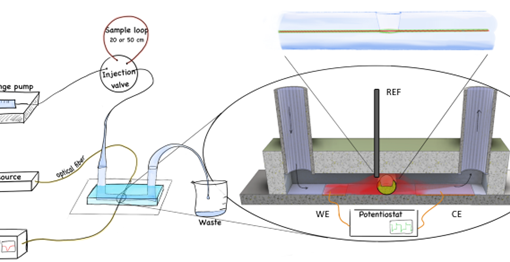
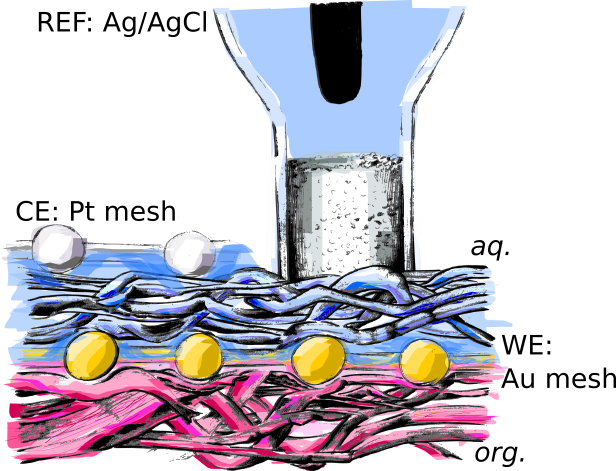
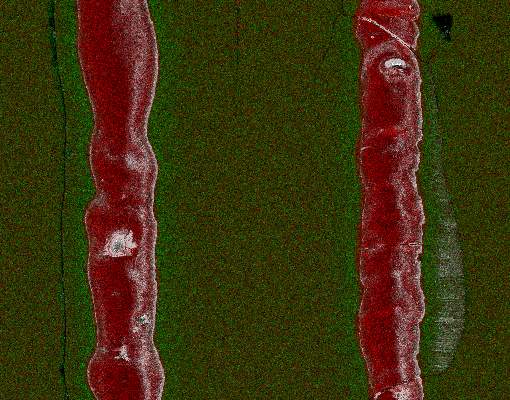
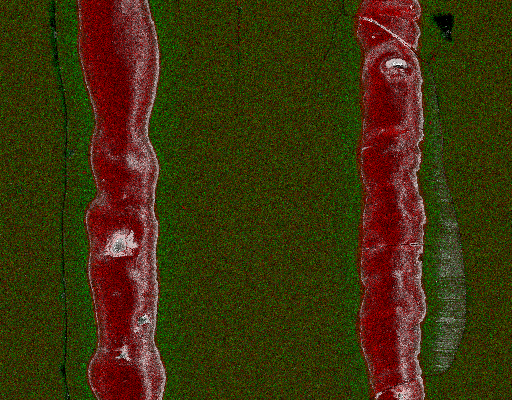
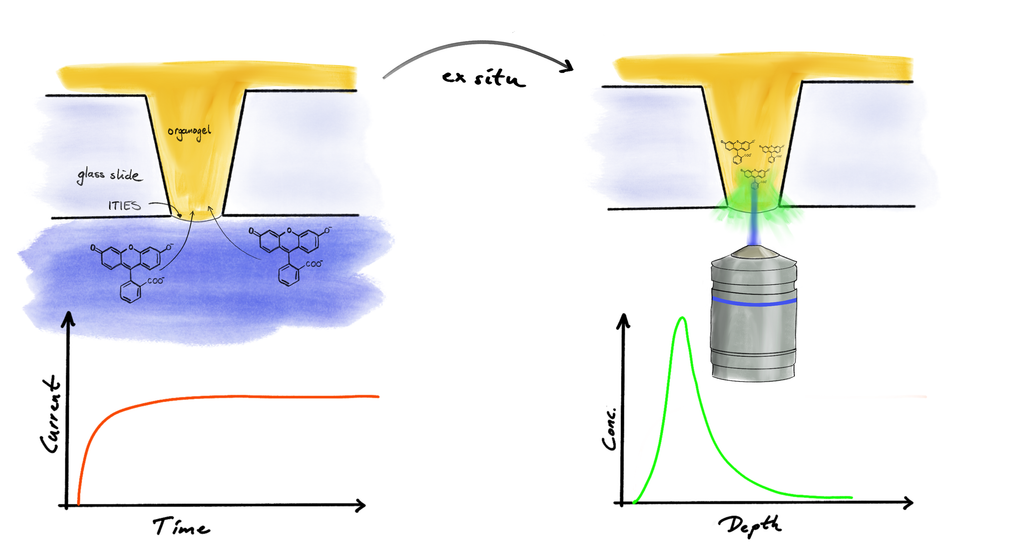
Since the gelled organic phase is stable enough to allow for ex situ investigations, we thought it would be fun to use fluorescence microscopy to look at the distribution of a fluorescent ion that was electrochemically injected into the organic phase across the interface with an aqueous electrolyte. We choose to use fluorescein, mainly because we had it at hand. In retrospect, we probably should have tried something with a little simpler chemistry.
In any case, the idea worked out, and we showed that we could use chronoamperometry to inject fluorescein ions (FL2-) into the organic phase and measure their distribution using a laser-scanning confocal fluorescence microscope. However, we noticed that the diffusion coefficient of FL2- in the organic phase was much lower than we expected. That led us down a long path of double- and triple-checking our results to finally conclude that this is likely because of relatively strong interaction between fluorescein and the PVC-polymer used to gel the organic phase.
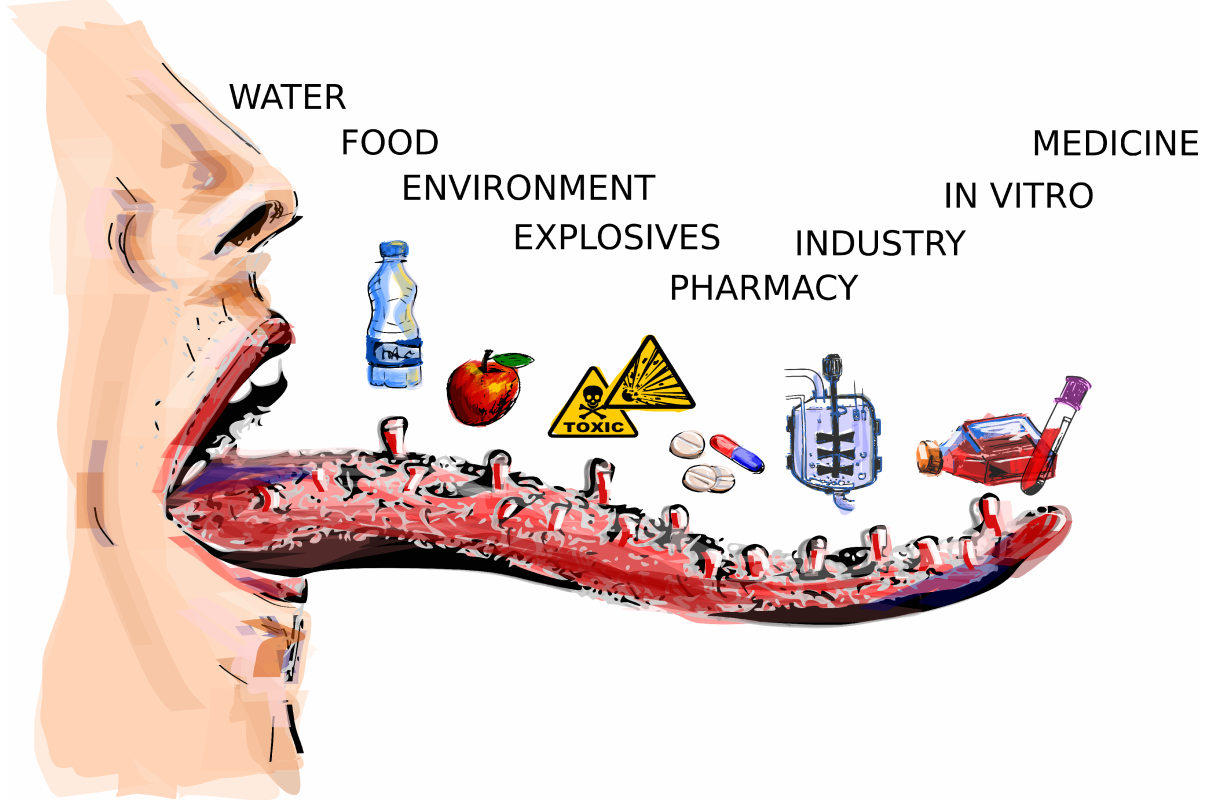
We are happy that the paper finally is published and hope that idea of using ex situ investigation of the ITIES will be used with other techniques such as Raman spectroscopy.
- J. Maciejewska-Komorowska, D. W. M. Arrigan, M. Jönsson-Niedziółka
A new perspective on electrochemistry at the ITIES – combining µITIES and confocal microscopy using a gelled organic phase in a glass membrane, Anal. Chem. (accepted)(2026). (link – OA)(Preprint on ChemRxiv)